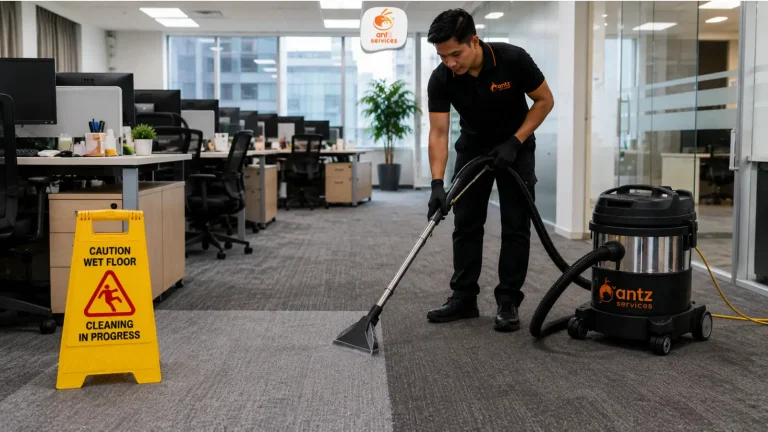
A spill on your carpet is stressful — but the stain itself is rarely the real problem. The real problem is what happens in the next 60 seconds. Use the wrong technique and a simple kopi o spill becomes a permanent brown mark. Use the right approach and most carpet stains come out completely. This guide covers carpet stain removal Malaysia step by step — the universal rules that apply to every stain, the specific methods for the most common stain types in Malaysian homes, and when the job requires a professional.
Key Takeaways
- The number one carpet stain removal Malaysia rule: blot, never rub. Rubbing spreads the stain and pushes it deeper into the fibres.
- Act within the first 5 minutes — fresh stains are dramatically easier to remove than dried ones.
- Different stain types need different treatments. Using the wrong method can set a stain permanently.
- Malaysia’s humidity causes stains to set faster than in drier climates — quick action matters more here.
- For dried, set, or professional-level stains, Antz Services provides on-site carpet cleaning from RM1 per sqft.
The 3 Rules of Carpet Stain Removal Malaysia
Before looking at individual stain types, these three rules apply to every single carpet stain situation.
Rule 1: Blot, Never Rub
This is the most important rule in carpet stain removal. Rubbing a carpet stain pushes the liquid deeper into the carpet pile and spreads it wider. Furthermore, rubbing damages carpet fibres — particularly in wool and delicate carpet types. Always blot by pressing a clean cloth straight down onto the stain, lifting it, and repeating with a fresh section of cloth until no more stain transfers.
Rule 2: Work from the Outside In
Start blotting at the outer edge of the stain and work toward the centre. Working from the inside out risks pushing the stain further into clean carpet fibres surrounding the spill. Therefore, always contain the stain by starting at its perimeter.
Rule 3: Test Your Cleaning Solution First
Before applying any cleaning product to a visible area, test it on a hidden section of carpet — beneath a sofa, inside a wardrobe, or at the edge of a rug. Some solutions cause colour fading on certain carpet materials. Consequently, a 30-second test on a hidden spot prevents a potential permanent bleach mark on your main carpet area.
Why Carpet Stain Removal Malaysia Is More Urgent Than in Cooler Countries
Malaysia’s year-round heat of 28°C to 35°C and humidity of 70% to 90% affect how quickly stains set into carpet fibres. In cooler, drier climates, a fresh spill left for 30 minutes is still usually treatable with home methods. In Malaysia’s heat, however, the liquid component evaporates faster — leaving behind concentrated stain compounds that bond more quickly to the carpet fibres.
Additionally, organic stains — food, beverages, and pet accidents — begin breaking down in Malaysia’s heat within hours rather than days. This breakdown process produces odour compounds and can attract bacteria rapidly. As a result, treating a spill immediately is significantly more important in Malaysia than global carpet care guides suggest.
Carpet Stain Removal Malaysia: By Stain Type
Different stain categories respond to different treatments. Using the correct method matters — the wrong approach can set a stain permanently into the fibre.
Tannin Stains — Kopi O, Coffee, Tea, Red Wine
Tannin-based stains are among the most common in Malaysian homes. Kopi o, teh tarik, coffee, and tea all contain tannins — plant compounds that bond with carpet fibres, particularly when hot.
Fresh tannin stain treatment:
- Blot up as much liquid as possible immediately with dry cloths.
- Mix equal parts cold water and white vinegar in a spray bottle.
- Spray lightly over the stained area — do not soak.
- Blot again with a clean cloth, working from the outside in.
- Repeat until no more colour transfers to the cloth.
- Rinse with cold water, blot dry, then sprinkle baking soda to absorb remaining moisture. Vacuum when dry.
Important: Use cold water only on tannin stains. Hot water can set tannin stains permanently — this is why pouring hot water on a tea stain makes it worse.
Dried tannin stain treatment: Dried kopi o or tea stains require a longer dwell time with the vinegar solution — apply generously and leave for 10 to 15 minutes before blotting. For stains older than 24 hours that have fully set into the fibre, professional extraction cleaning produces significantly better results than further DIY treatment.
Protein Stains — Blood, Egg, Dairy, Pet Accidents
Protein-based stains respond to a completely different treatment from tannin stains. Hot water must never be used on protein stains — it cooks the proteins and permanently bonds them to the carpet fibre.
Fresh protein stain treatment:
- Blot up as much material as possible with cold, damp cloths.
- Mix one tablespoon of mild dish soap with two cups of cold water.
- Apply to the stain using a cloth — do not pour directly.
- Blot from outside in until the stain lifts.
- Rinse with cold water and blot dry.
For pet urine specifically, follow up with an enzyme cleaner after the initial blotting. Enzyme cleaners break down the uric acid compounds in urine that water and dish soap cannot dissolve — these compounds are what cause the persistent odour that returns in humid conditions.
Oil and Grease Stains — Curry, Nasi Lemak, Rendang
Oil-based stains from Malaysian food — particularly curry sauce, rendang oil, and nasi lemak coconut gravy — are the trickiest category because oil repels water-based cleaners.
Fresh oil stain treatment:
- Immediately blot up as much oil as possible — do not add water yet.
- Sprinkle baking soda or cornflour over the stain and leave for 15 to 20 minutes to absorb the oil.
- Vacuum the baking soda up completely.
- Apply a small amount of mild dish soap directly to the stain using a cloth.
- Work the soap gently into the stain, then blot with a damp cloth.
- Rinse with cold water and blot dry.
Why this works: Dish soap is a surfactant — it breaks down oil by surrounding the oil molecules and allowing water to carry them away. However, too much soap leaves residue that attracts more dirt over time. Therefore, use minimal amounts and rinse thoroughly.
Mud and Soil Stains — Monsoon Season Tracking
Malaysia’s monsoon seasons bring muddy footwear and wet soil tracking onto home carpets. Counterintuitively, the best approach for mud is to wait — not clean immediately.
Mud stain treatment:
- Do not touch wet mud. Leave it to dry completely — usually 1 to 2 hours.
- Once fully dried, vacuum up the dried mud carefully.
- For remaining colour residue, apply a mild detergent solution and blot.
- Rinse with cold water and blot dry.
Why waiting works: Wet mud spreads and pushes grit deeper into the carpet pile when disturbed. Dry mud, in contrast, vacuums up cleanly without spreading the stain further.
Ink and Dye Stains
Ink stains require specific treatment and should be addressed immediately. Furthermore, different ink types need different approaches — ballpoint, permanent marker, and stamp ink all respond differently.
Ink stain treatment:
- Blot immediately without adding water.
- Apply rubbing alcohol to a clean cloth and gently blot the stain — do not saturate.
- Continue blotting with fresh cloth sections until no more ink transfers.
- Rinse with cold water and blot dry.
Do not use hot water or scrub — both spread ink into surrounding fibres rapidly.
Wax and Candle Stains
Wax stains require a heat-based approach — the opposite of most other stains.
Wax stain treatment:
- Allow the wax to harden completely — speed this up by placing an ice pack on the wax.
- Once hard, carefully break up the wax and vacuum up the pieces.
- Place a clean white cloth over any remaining wax residue.
- Use a warm iron on low heat over the cloth — the residual wax transfers from the carpet to the cloth.
- Blot any remaining colour with a mild detergent solution.
How to Remove Old Dried Carpet Stains Malaysia
Dried and set stains are significantly harder than fresh ones. However, several approaches work on older stains before escalating to professional treatment.
Step 1 — Rehydrate the stain: Apply cold water sparingly to the dried stain and allow it to sit for 5 minutes. This softens the dried stain compounds and makes them more responsive to cleaning.
Step 2 — Apply appropriate treatment: Use the method corresponding to the stain type above. For unidentified old stains, start with the mild dish soap solution — it is safe for most stain types.
Step 3 — Repeat multiple times: Old stains rarely lift in a single treatment. Apply the treatment, blot, allow to dry partially, then repeat. Multiple gentle passes typically produce better results than one aggressive scrub.
Step 4 — Consider enzyme cleaner: For biological stains that have dried — pet accidents, food, beverage — enzyme cleaners break down the organic compounds that water-based methods leave behind. Apply according to the product instructions and allow sufficient dwell time.
When to stop DIY and call a professional: If after 3 attempts using the correct method the stain has not reduced significantly, further DIY treatment risks damaging the carpet fibre. At this point, professional carpet stain removal Malaysia extraction is the right call.
When to Call a Professional for Carpet Stain Removal Malaysia
DIY carpet stain removal works well for fresh stains treated promptly with the right method. However, certain situations require professional treatment to achieve a complete result — or to avoid making the stain worse.
Call a professional when:
- The stain is more than 48 hours old and has set deeply into the fibres
- Previous DIY attempts have not reduced the stain significantly
- The stain covers a large area (above 30 cm diameter)
- The stain involves pet urine with persistent odour
- The carpet material is wool, silk, or Persian — these require specialist products
- Multiple stains across a carpet that has not been professionally cleaned in over 12 months
- The stain is combined with general carpet soiling that needs full extraction cleaning
At Antz Services, our professional carpet stain removal Malaysia process uses hot water extraction combined with pre-treatment agents to address stains that home methods cannot fully resolve. For full pricing, see our carpet cleaning price guide →. For our full on-site service guide, see our carpet cleaning KL guide →.
Carpet Stain Removal Malaysia: DIY Kit to Keep at Home
Having the right supplies accessible means you can respond to any spill within 60 seconds — dramatically improving your stain removal outcomes.
Recommended home kit:
- Clean white cloths or microfibre cloths — white prevents colour transfer to the carpet
- Spray bottle for cleaning solutions
- White vinegar (for tannin stains)
- Baking soda or cornflour (for oil absorption and odour)
- Mild dish soap (for oil and general stains)
- Rubbing alcohol (for ink)
- Enzyme cleaner (for pet accidents)
- Cold water supply access
Store this kit in the room where your main carpet is. The most important factor in successful carpet stain removal Malaysia is response time — and having supplies immediately at hand eliminates the 5-minute delay of searching for products.
Frequently Asked Questions
What is the best method for carpet stain removal in Malaysia?
The best method depends on the stain type. For tannin stains (coffee, tea, red wine), use cold water and white vinegar. For protein stains (blood, egg, pet accidents), use cold water and mild dish soap, never hot water. For oil stains (curry, food grease), absorb first with baking soda, then treat with dish soap. Always blot — never rub.
Does baking soda remove carpet stains?
Baking soda absorbs moisture and surface odour effectively. However, it does not remove stain compounds from the carpet fibres — it needs to be combined with a liquid cleaning solution (vinegar or dish soap) for stain removal. Use it as an absorption agent first, then follow with the appropriate liquid treatment for the stain type.
How do I remove old dried carpet stains Malaysia?
Rehydrate the stain with cold water first, then apply the treatment appropriate for the stain type with a longer dwell time. Repeat multiple gentle passes rather than one aggressive scrub. For stains that do not respond after 3 attempts, professional extraction cleaning produces better results without risking further fibre damage.
Can professional carpet stain removal Malaysia remove any stain?
Most stains respond very well to professional treatment — particularly food, beverages, pet accidents, and general soiling. However, certain stains that have been set for an extended period, or stains involving dyes that have permanently bonded to the carpet fibre, may reduce but not disappear completely. The sooner treatment happens, the better the outcome.
How much does professional carpet stain removal Malaysia cost?
Professional carpet cleaning at Antz Services starts at RM1 per sqft for office carpet. Home carpets and rugs are custom quoted. Stain pre-treatment is included as standard in our cleaning service. See the full price guide →.
Conclusion
Successful carpet stain removal Malaysia comes down to three things — acting immediately, using the right method for the stain type, and blotting rather than rubbing. Most fresh stains in Malaysian homes respond very well to the methods above. For dried stains, older set-in marks, or situations where DIY methods have not worked, professional extraction cleaning delivers the results that home products cannot.
Antz Services provides on-site carpet cleaning across 62+ areas in KL and Selangor, with stain pre-treatment included as standard in every session.
WhatsApp Antz Services to Book Professional Carpet Stain Removal →
Need Help With Carpet Cleaning?
Antz Services helps homes and offices across KL & Selangor with professional carpet cleaning to lift dirt, stains, dust, and odours from carpets and rugs.