
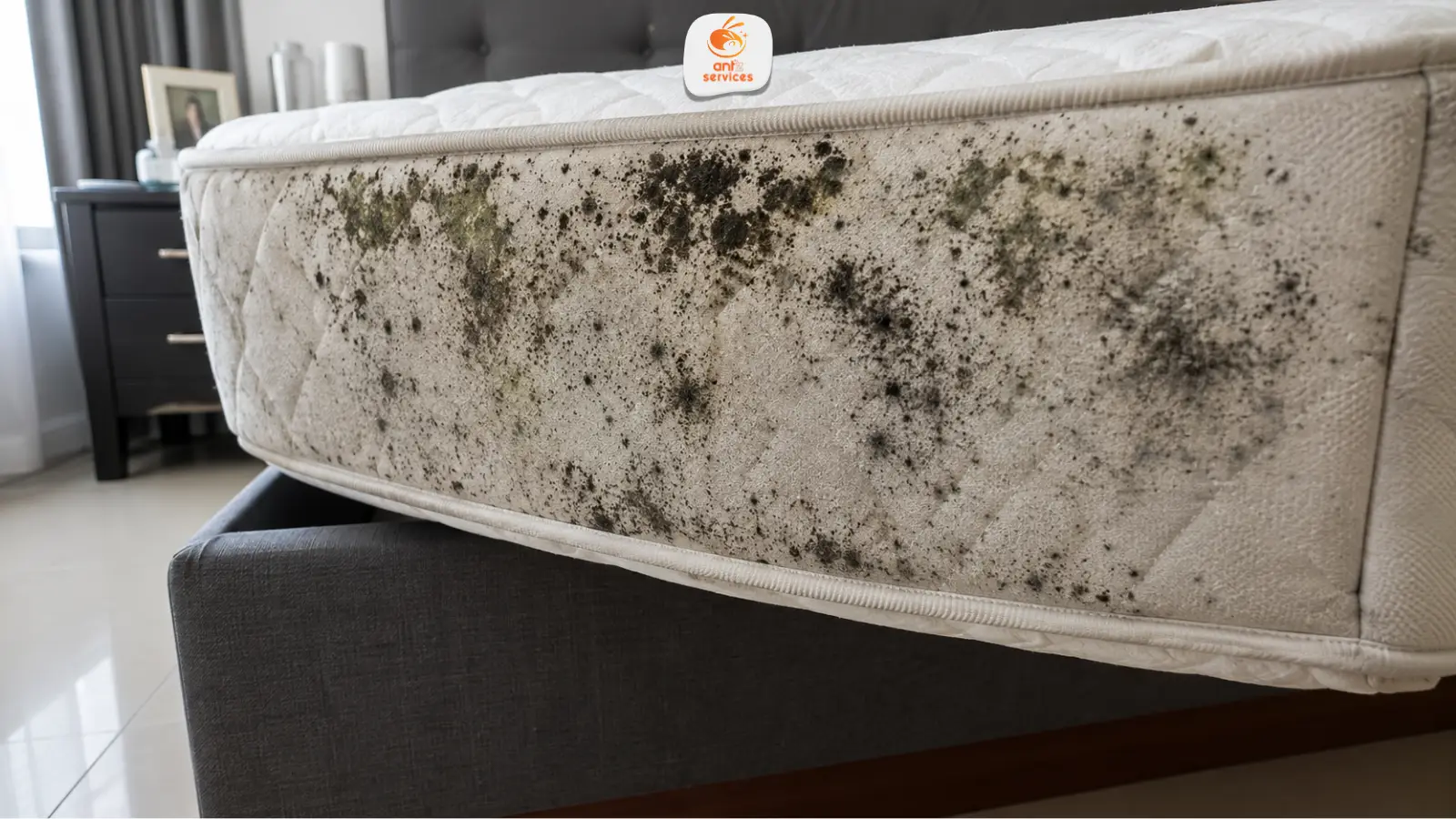
Lifting your mattress and finding dark patches is an unsettling discovery. It is worse than it looks, too, because by the time mould becomes visible it has usually been growing inside the mattress for weeks. Mattress mould Malaysia is more common than most homeowners realise, and far more likely here than in temperate countries because of our year-round humidity. So this guide covers how to identify it and what causes it in Malaysian bedrooms. It also explains how to treat surface mould safely, and when it has gone too far for home treatment.
Key Takeaways
- Mattress mould Malaysia develops because of year-round ambient humidity of 70 to 90 percent. Unlike temperate climates, those conditions never get a seasonal break.
- The underside of the mattress is the most common starting point, particularly in bedrooms with flat wooden bases rather than slatted frames.
- The Southwest Monsoon, from May to September, accelerates growth. This is when most homeowners discover the problem.
- Small surface patches can be treated at home with white vinegar or hydrogen peroxide. Deep or widespread mould needs professional cleaning or replacement.
- Mattress mould and dust mites often co-exist in the same conditions, so treating one without the other gives incomplete results.
Why Mattress Mould Is More Common in Malaysia
Understanding the problem here means understanding one fundamental difference from the climate most mould guides describe.
Most guides are written for countries with four seasons. There, winter brings humidity below 50 percent, which slows or stops spore germination. So mattress mould is a spring and summer problem that subsides naturally as the weather cools.
Malaysia has no winter. Year-round temperatures of 28°C to 35°C and humidity of 70 to 90 percent let mould grow inside a mattress twelve months a year. There is no dry season to kill developing colonies or dry out accumulated moisture.
On top of that, our two monsoon seasons push indoor relative humidity above 85 percent in bedrooms without continuous air conditioning. The Southwest Monsoon runs May to September, and the Northeast Monsoon November to March. At that humidity level, spore germination accelerates sharply. That is why many Malaysian homeowners first discover mattress mould during the Southwest Monsoon peak.
Signs of Mattress Mould
Catching it early, before it spreads, gives you far more treatment options. Look for these signs.
Black, green, or grey spots
The most obvious sign is visible dark spotting. It usually appears as black, dark green, or grey patches, generally circular and spreading outward from a central point. The underside is the most common starting location, because it gets the least airflow and collects the most moisture from the bed base.
A musty or earthy smell
A persistent musty odour often means mould is growing inside the padding before anything shows on the surface. You will notice it most when you first lie down, or when you flip the mattress. In many mattress mould Malaysia cases this smell gets mistaken for general mattress ageing, which delays treatment.
Worsening allergy or respiratory symptoms
Mattress mould releases spores into the bedroom air continuously. For anyone with asthma, allergic rhinitis, or dust sensitivity, symptoms that worsen in the bedroom can point to mould inside the mattress before you see anything. That includes a blocked nose, morning sneezing, and skin rash. However, dust mites cause similar symptoms and often share the same humid conditions. See our dust mites vs bed bugs Malaysia guide for how to tell them apart.
Discolouration on the underside
The first place to check is the underside. Lift the mattress off the base and inspect the bottom face. Discolouration ranging from pale yellow to dark brown or green, especially in the lower corners and centre, indicates moisture buildup and early growth.
What Causes Mattress Mould in Your Bedroom
Several factors decide which Malaysian bedrooms develop it faster than others in the same climate.
A flat wooden base with no ventilation gaps
This is the single biggest factor. When a mattress sits directly on a flat, solid wooden surface with no slats or air gaps, the moisture you release during sleep cannot escape downward. Instead it accumulates at the underside continuously. Over weeks, that creates exactly the warm, dark, moist environment mould needs.
A slatted frame works differently. The gaps between slats let moisture dissipate downward, which cuts underside accumulation considerably. So if your bed has a flat base, adding slats or ventilation bars underneath is a worthwhile immediate step.
Air conditioning off during the day
Bedrooms where the AC only runs at night go through large daytime humidity swings, especially in monsoon months. In an unventilated bedroom, daytime humidity can reach 85 to 95 percent. That moisture accumulates in the mattress and, over months, builds up enough to sustain mould.
A mattress directly on the floor
This is the fastest route to mattress mould in Malaysia. Floor surfaces in tropical climates hold ground-level moisture, both from the building slab and from ambient humidity. A mattress on the floor takes continuous moisture from below with no airflow at all, which is the highest-risk setup.
Infrequent airing and vacuuming
A mattress that is never aired or vacuumed builds up skin cells, dust, and organic matter, which is what mould feeds on. In our humidity, that food layer plus ambient moisture can let mould establish within 3 to 6 months, with no spill or incident needed.
How to Treat Mattress Mould by Severity
Treatment depends on how far the mould has spread and how deeply it has penetrated.
Mild surface mould
This covers patches smaller than a palm, developed within the last 4 to 6 weeks, and confined to the surface fabric.
Step 1: Take the mattress outside if you can. If not, open all windows and run a fan to limit indoor spore spread during treatment.
Step 2: Vacuum the affected area with an upholstery attachment before applying anything wet. This lifts loose spores before they can spread once wetted.
Step 3: Mix equal parts white vinegar and cold water in a spray bottle. Spray the area and leave it 15 minutes. The acidity kills surface spores on contact.
Step 4: Blot with a clean white cloth. Never scrub, because scrubbing spreads spores across a wider area.
Step 5: Sprinkle baking soda lightly over the treated area, leave it 30 minutes to absorb residual moisture, then vacuum it up.
Step 6: Dry the mattress thoroughly before putting bedding back. In sunny weather, put it in direct sunlight for 3 to 4 hours. During monsoon season, run a fan at the surface for 3 to 4 hours with the AC on to keep ambient humidity down.
Moderate mould
This covers patches larger than a hand, or mould that returned within weeks of the treatment above.
At this point, white vinegar alone is not enough. The root system has established inside the fibres, past the surface layer. Try 3 percent hydrogen peroxide instead. Apply it to the area, leave 10 minutes, and blot dry. Peroxide penetrates a little deeper than vinegar and handles moderate mould well. Test it on a hidden section of the mattress first, since peroxide can lighten some fabrics.
If the mould comes back again after that, the colony sits inside the padding, beyond the reach of any surface treatment. Professional extraction cleaning is the right next step.
Extensive or deep mould
This applies when mould covers a large area, has gone through to the inner padding so it shows on both faces, or has been present for several months.
Professional hot water extraction reaches several centimetres into the mattress, kills spores through heat and extraction, and removes the organic matter feeding the colony. It is the most thorough option short of replacement. See our mattress cleaning price guide for full pricing.
Replacement makes sense in three cases. The mould has degraded the material itself, so it feels stiff or crumbly. The smell persists after professional cleaning. Or visible mould covers most of the surface.
How to Prevent Mattress Mould
Once treated, these habits stop it re-establishing in Malaysian conditions.
Switch to a slatted bed frame. This one change makes the biggest difference in a humid bedroom, because it lets air circulate beneath the mattress and cuts underside moisture buildup.
Use a breathable waterproof protector. It puts a barrier between your sweat and the mattress fabric while still allowing airflow. Wash it monthly.
Air the mattress monthly. Stand it against a wall near a window, or outside on a dry day, for 2 to 3 hours. Sunlight kills surface spores directly. During monsoon months, use a fan for 2 to 3 hours with the AC running instead.
Keep bedroom humidity below 70 percent. Running the AC for a few hours daily, even on cool cycle rather than cold, reduces ambient humidity noticeably during monsoon months. In rooms without AC, a small dehumidifier overnight makes a measurable difference.
Book professional cleaning every 6 months. Extraction cleaning clears accumulated organic matter and early mould before it becomes visible. See our mattress cleaning tips Malaysia guide for a full between-session routine.
Frequently Asked Questions
Why does my mattress have mould in Malaysia?
Mattress mould Malaysia develops from year-round humidity of 70 to 90 percent combined with the moisture you release during sleep. Three factors contribute most: a flat wooden bed base with no airflow underneath, air conditioning run only at night, and infrequent airing and vacuuming. Unlike temperate climates, we get no dry season to dry out accumulated mattress moisture.
Can a mouldy mattress be cleaned, or must it be replaced?
Small, recent surface mould responds well to home treatment with white vinegar followed by thorough drying. Moderate mould that returned after home treatment does better with professional extraction cleaning. Extensive mould that has gone through the full thickness, or has degraded the material, is best handled by replacement.
Is mattress mould dangerous?
Mattress mould releases spores into the bedroom air continuously. For anyone with asthma, allergic rhinitis, or respiratory sensitivity, that can worsen symptoms, and children and elderly family members tend to be most affected. Damp indoor environments are also linked more broadly to respiratory irritation. So it is worth treating promptly. If someone at home has ongoing respiratory symptoms, see a doctor as well as dealing with the mould.
How do I prevent mattress mould in Malaysia’s humidity?
Five steps do most of the work:
- Switch to a slatted frame so air moves beneath the mattress.
- Use a breathable waterproof protector and wash it monthly.
- Air the mattress monthly, using a fan when sun is not available.
- Keep bedroom humidity below 70 percent with AC.
- Book professional cleaning every 6 months.
How much does professional mattress mould treatment cost in Malaysia?
Antz Services provides professional mattress cleaning, which includes mould treatment during extraction, from RM80 for single or super single, RM100 for queen, and RM120 for king. The process removes mould spores, their food source, and embedded allergens through hot water extraction. No transportation charges apply across more than 62 areas in KL and Selangor.
Conclusion
Mattress mould Malaysia is more common than most homeowners expect, precisely because our humidity gives mould ideal conditions year-round with no seasonal break. The underside, particularly on a flat wooden base, is where it almost always starts. Small, recent surface patches respond well to white vinegar followed by thorough drying. Established or returning mould needs professional extraction cleaning to reach the colony inside the fabric.
At Antz Services, professional mattress cleaning from RM80 removes mould spores, allergens, and the organic matter that sustains them, across more than 62 areas in KL and Selangor.
Need Help With Mattress Cleaning?
Antz Services helps households across KL & Selangor with professional mattress cleaning to remove dust, stains, odours, and allergens for a fresher sleep environment.


